
PARROCCHIA DI SAN GIACOMO MAGGIORE
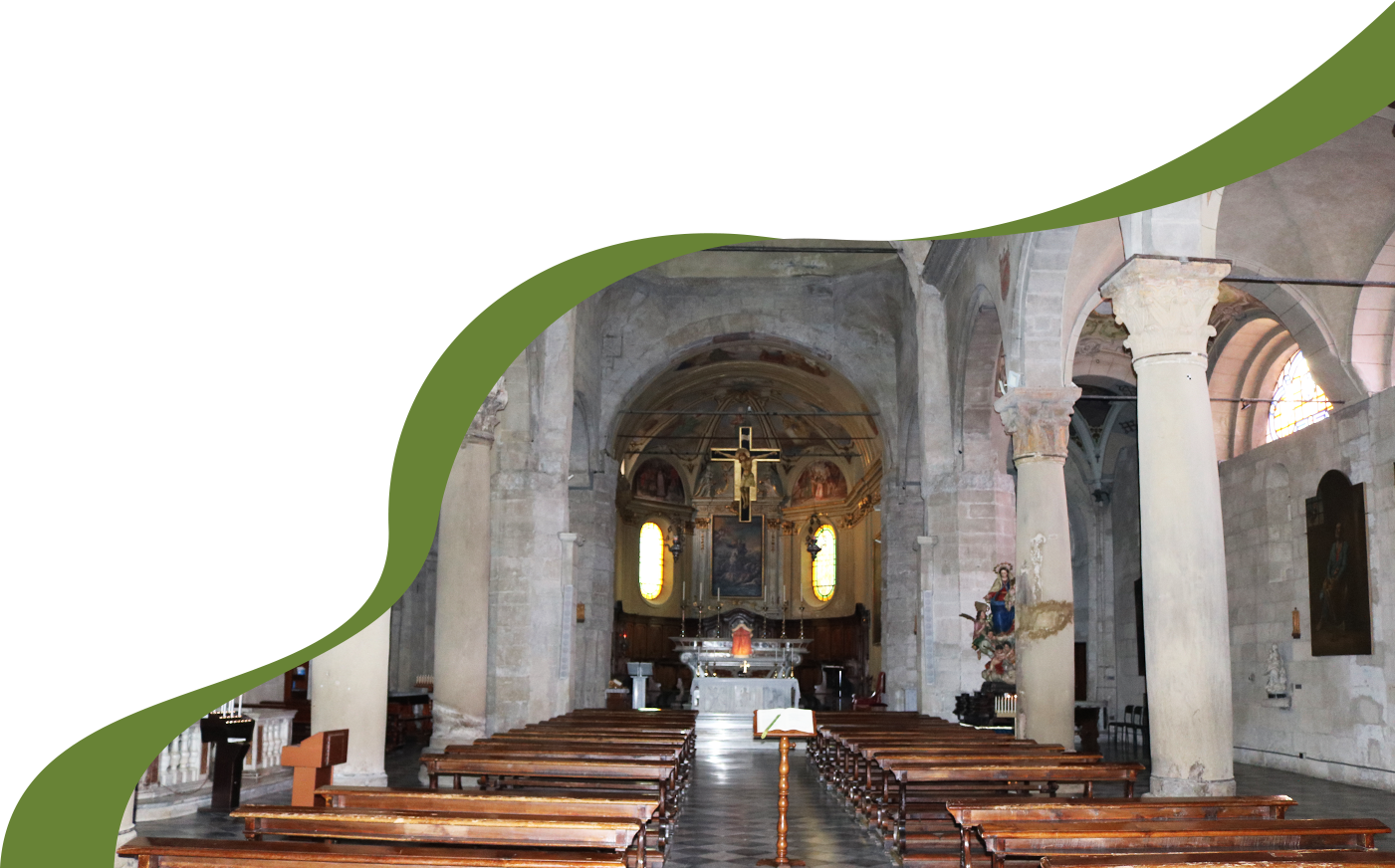
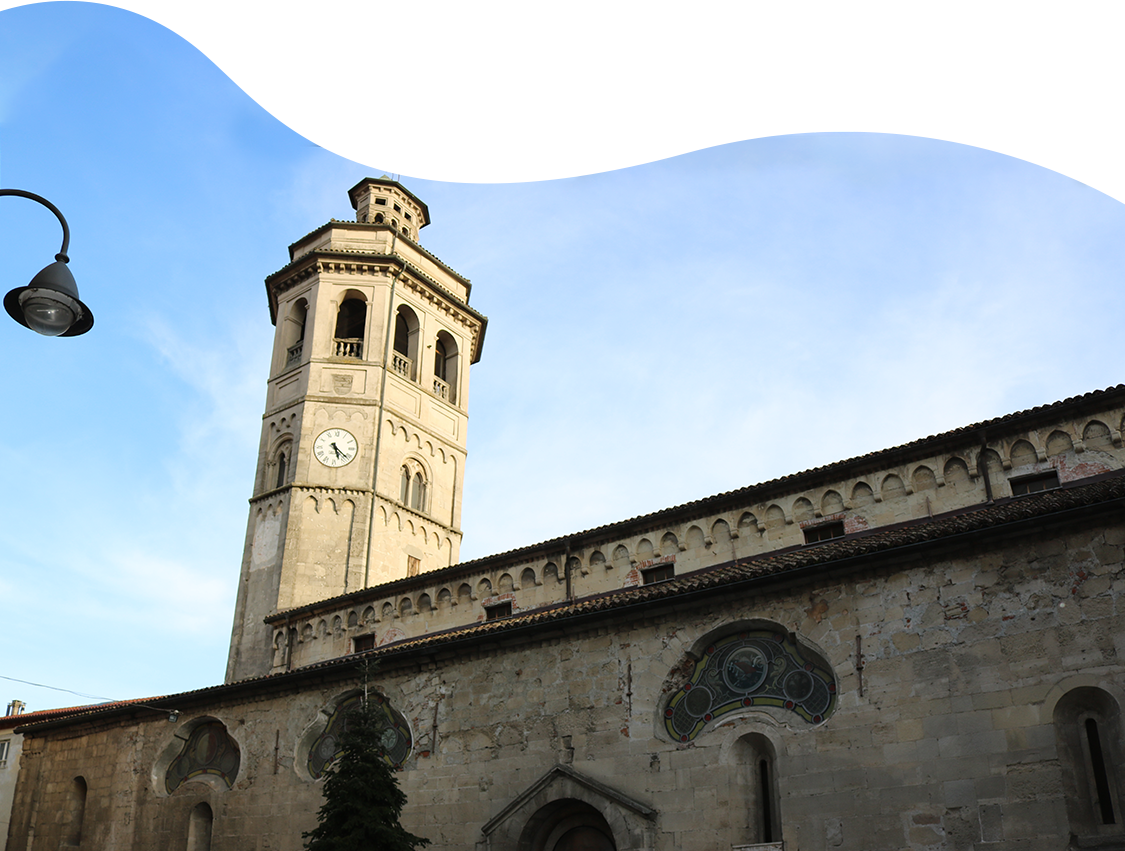
The first mention of San Giacomo dates back to 1172, when the Consuls of Alessandria here swore allegiance to the Obertenghi. Of Romanesque-Lombard style, with a Latin cross plan with three naves, divided by two rows of columns with different capitals: two of the Corinthian type, three decorated with leaves and the other three, in Burgundian style, with zoomorphic figures. The colonnade remained strongly inclined after the addition of the bell tower in 1352. Gothic alterations and the opening of large windows, in the Baroque era, on the sides, testify to the course of the centuries.
Between 1957 and ’60 it was restored following the medieval forms and under the plaster from the north wall part of the oldest decorations resurfaced including the fourteenth century fresco of the Madonna della Misericordia, which embraces and protects the people of Gavia and other small fragments .
PARROCCHIA DI SAN GIACOMO MAGGIORE
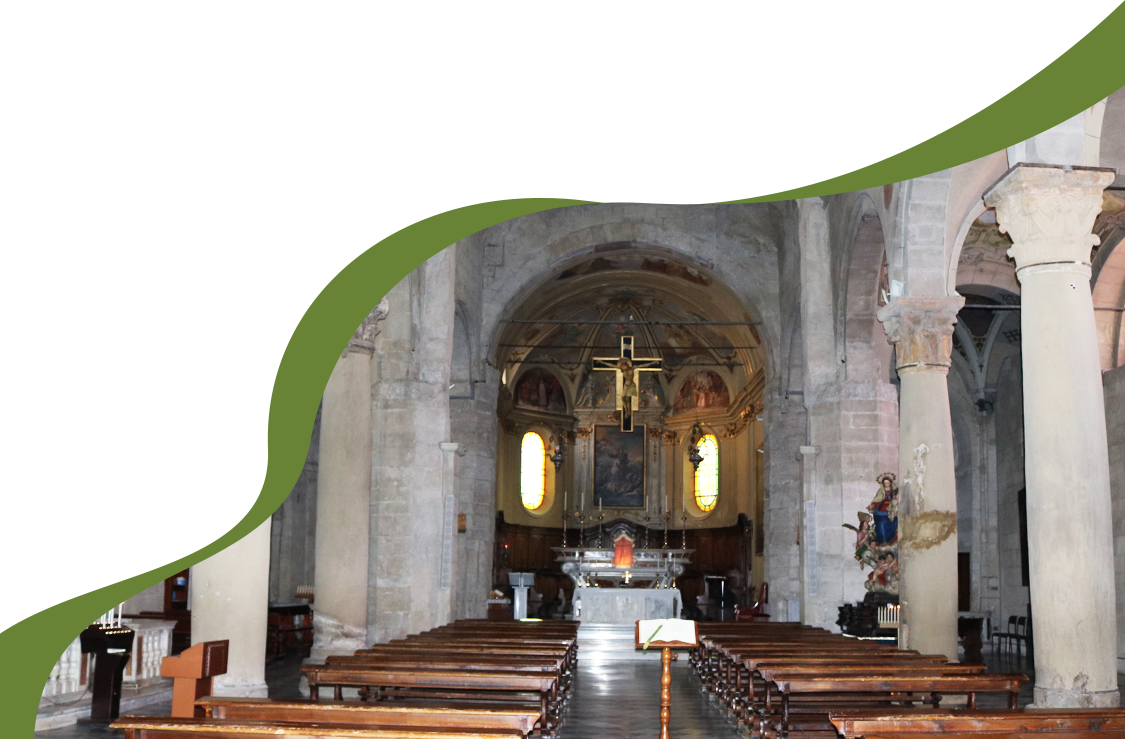
The first mention of San Giacomo dates back to 1172, when the Consuls of Alessandria here swore allegiance to the Obertenghi. Of Romanesque-Lombard style, with a Latin cross plan with three naves, divided by two rows of columns with different capitals: two of the Corinthian type, three decorated with leaves and the other three, in Burgundian style, with zoomorphic figures. The colonnade remained strongly inclined after the addition of the bell tower in 1352. Gothic alterations and the opening of large windows, in the Baroque era, on the sides, testify to the course of the centuries.
Between 1957 and ’60 it was restored following the medieval forms and under the plaster from the north wall part of the oldest decorations resurfaced including the fourteenth century fresco of the Madonna della Misericordia, which embraces and protects the people of Gavia and other small fragments .
Beyond the wooden crucifix, are the Baroque altar of the Holy Rosary and the marble statue of the Madonna del Rosario (1730), by Cacciatori, surrounded by the fifteen paintings of the “Mysteries of the Rosary”, of the Roman school, from the 18th century. Then, the copy of the Polyptych of San Giacomo, by Manfredino Bosilio from 1478. The original was sold in 1862 to the Ligustica Academy of Genoa, where it is kept today. This is followed by the Baptism of Christ by Lazzaro Calvi, of the Genoese school of 1591.
The main altar is decorated with three marble panels, taken from the dismantled sarcophagus of Antonio Guasco: the central one depicts the Risen Christ, the lateral ones the Virgin Mary and the Archangel Gabriel. Behind, the painting by Ratti “San Giacomo che scaccia i mori”, shows San Giacomo, known as “Matamoros”, riding a white horse, fighting the Saracens in the battle of Clavijo, in Spain.
Beyond the wooden crucifix, are the Baroque altar of the Holy Rosary and the marble statue of the Madonna del Rosario (1730), by Cacciatori, surrounded by the fifteen paintings of the “Mysteries of the Rosary”, of the Roman school, from the 18th century. Then, the copy of the Polyptych of San Giacomo, by Manfredino Bosilio from 1478. The original was sold in 1862 to the Ligustica Academy of Genoa, where it is kept today. This is followed by the Baptism of Christ by Lazzaro Calvi, of the Genoese school of 1591.
The main altar is decorated with three marble panels, taken from the dismantled sarcophagus of Antonio Guasco: the central one depicts the Risen Christ, the lateral ones the Virgin Mary and the Archangel Gabriel. Behind, the painting by Ratti “San Giacomo che scaccia i mori”, shows San Giacomo, known as “Matamoros”, riding a white horse, fighting the Saracens in the battle of Clavijo, in Spain.
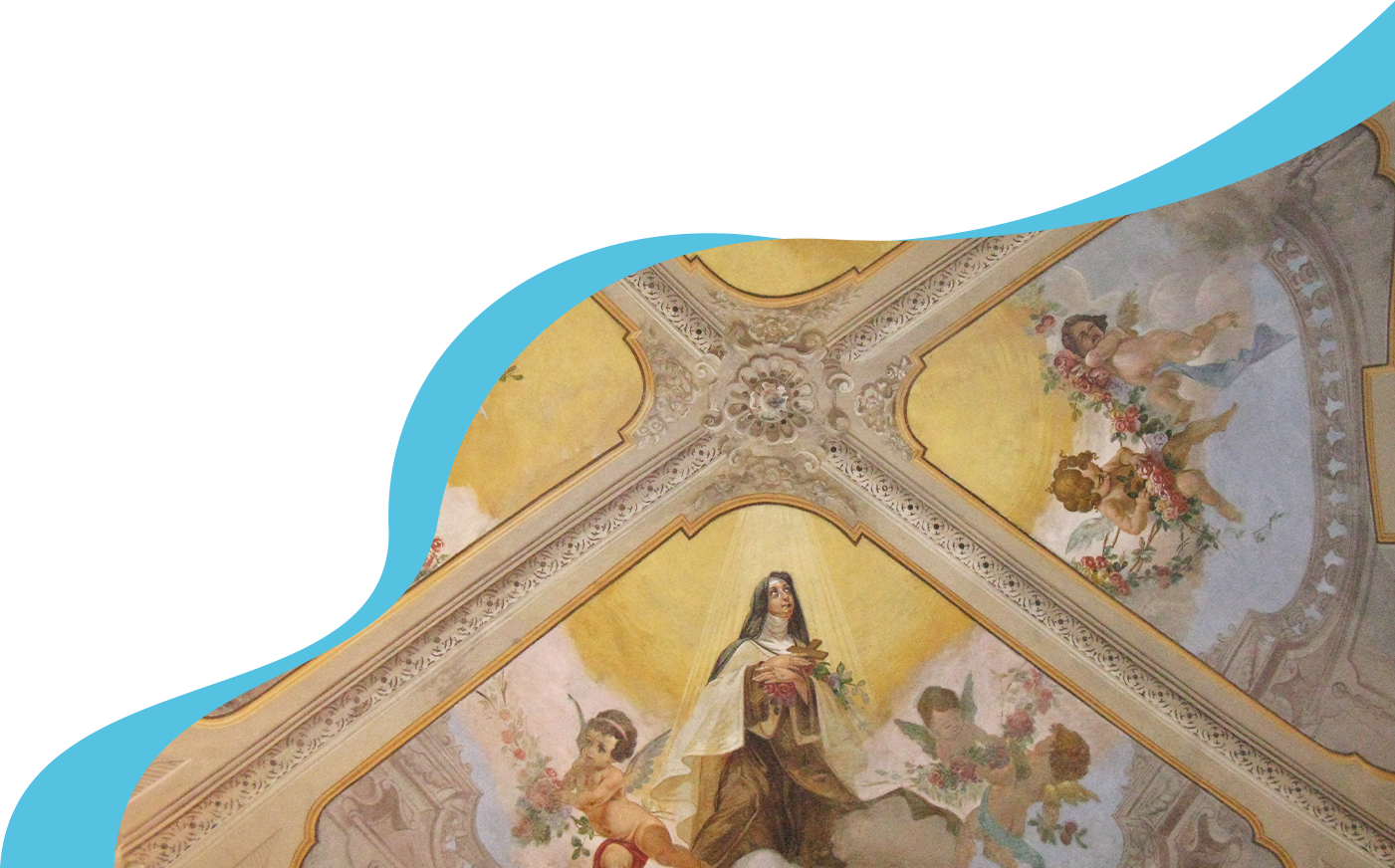
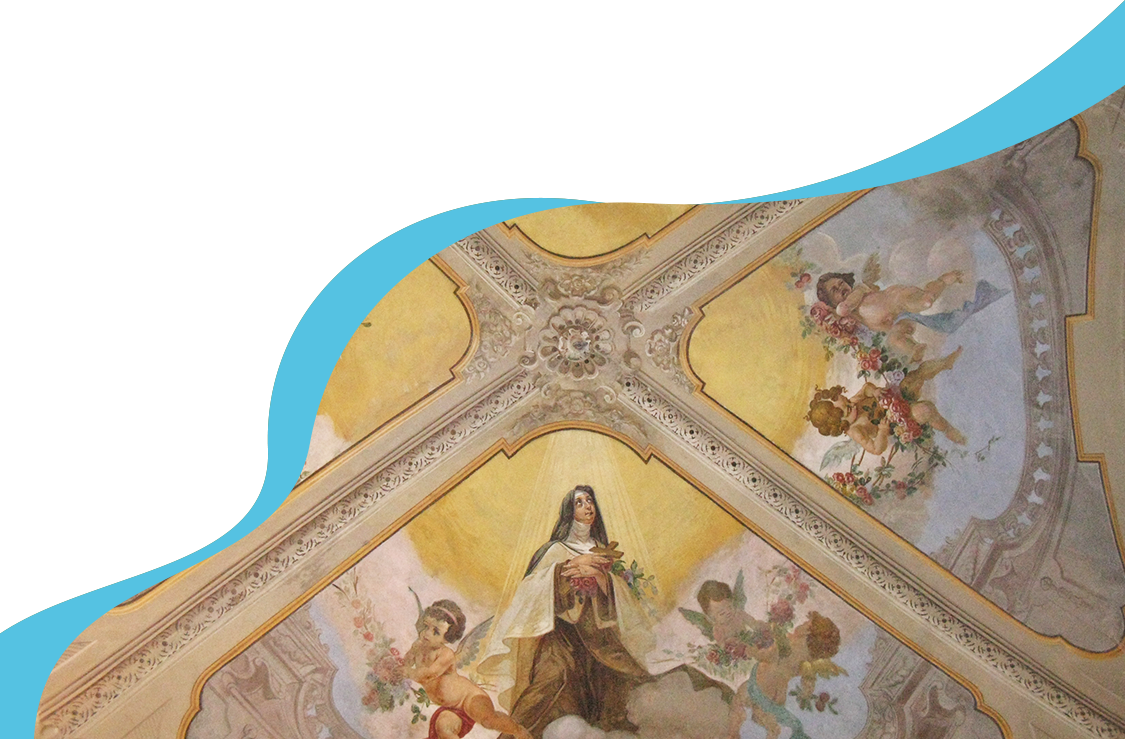
The right aisle begins The dream of St. Joseph, by G.B. Paggi, school Genoese from the 1600s, then the marble statue of the Madonna del Rosario by Schiaffino, from the 17th century, contrasts with another Madonna del Rosario, a polychrome wooden statue from 1854 by L. Montecucco, then San Pietro Apostolo, from the Genoese school from the 1700s, The Presentation of Mary in the Temple from 1500 by Bernardo Castello, and The Resurrection of Lazarus, by Montessoro, from 1600.
The Renaissance altarpiece by Gandolfino da Roreto (1515-1520) follows: Madonna and Child with St. John the Baptist and St. James and the lunette of the Adoration of the Child.
The right aisle begins The dream of St. Joseph, by G.B. Paggi, school Genoese from the 1600s, then the marble statue of the Madonna del Rosario by Schiaffino, from the 17th century, contrasts with another Madonna del Rosario, a polychrome wooden statue from 1854 by L. Montecucco, then San Pietro Apostolo, from the Genoese school from the 1700s, The Presentation of Mary in the Temple from 1500 by Bernardo Castello, and The Resurrection of Lazarus, by Montessoro, from 1600.
The Renaissance altarpiece by Gandolfino da Roreto (1515-1520) follows: Madonna and Child with St. John the Baptist and St. James and the lunette of the Adoration of the Child.
Finally, a 15th century fresco, San Sebastiano and San Rocco. Outside, the facade conforms to its origins: simple and linear, in pure Romanesque style. The splayed portal and capitals supporting round arches. On the first arch mythological Harpies, symbol of immorality.
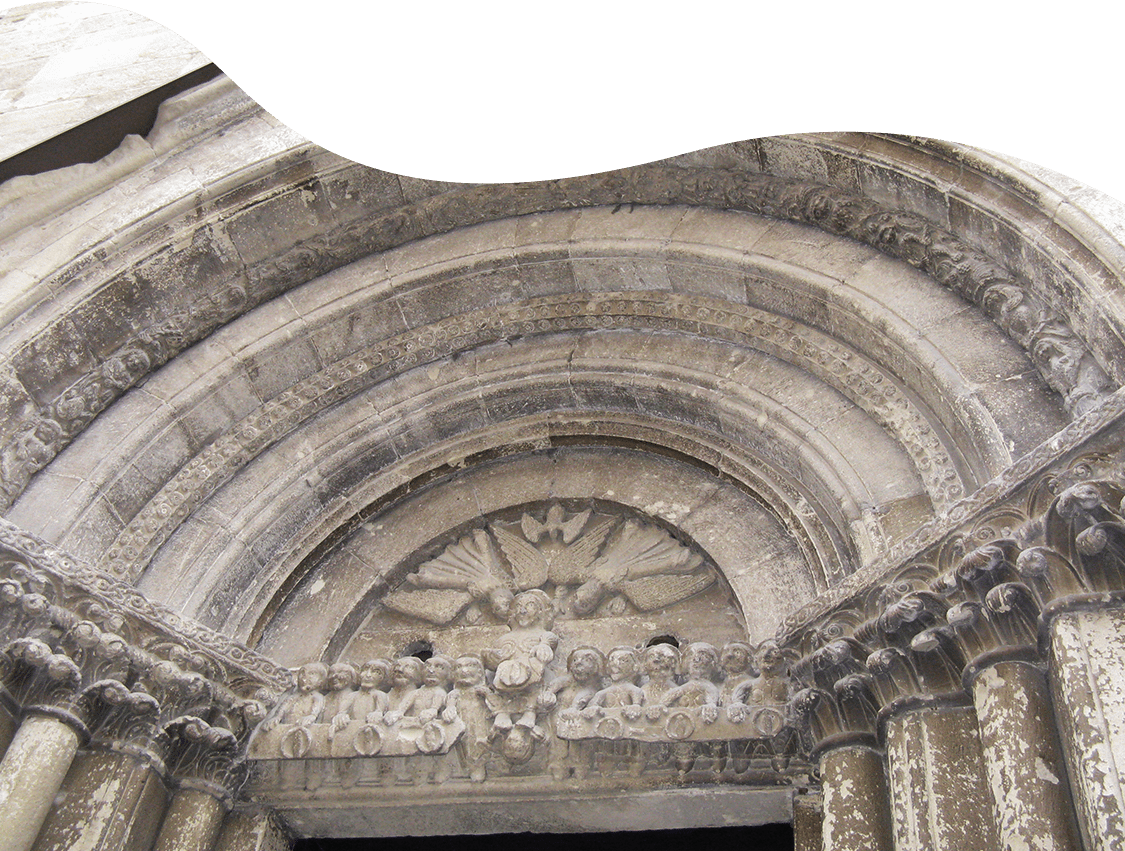
In the lunette, a Burgundian-style high relief of the Last Supper: Christ enthroned, with his feet resting on an inverted figure, the Antichrist. The Apostles on the sides: on the right St. James the Greater, on the left St. Peter. Above the lunette, between the winged figures of the “Wind” and the “Fire”, a Dove, symbol of the Holy Spirit.
On the rose window the interrupted ring symbolizing human imperfection or, according to a legend, “The Devil, condemned to wander without rest, had only one way to settle in one place and perform his evil spells: to enter a body in the shape of a circle where it could spin indefinitely”.
Finally, a 15th century fresco, San Sebastiano and San Rocco. Outside, the facade conforms to its origins: simple and linear, in pure Romanesque style. The splayed portal and capitals supporting round arches. On the first arch mythological Harpies, symbol of immorality.
In the lunette, a Burgundian-style high relief of the Last Supper: Christ enthroned, with his feet resting on an inverted figure, the Antichrist. The Apostles on the sides: on the right St. James the Greater, on the left St. Peter. Above the lunette, between the winged figures of the “Wind” and the “Fire”, a Dove, symbol of the Holy Spirit.
On the rose window the interrupted ring symbolizing human imperfection or, according to a legend, “The Devil, condemned to wander without rest, had only one way to settle in one place and perform his evil spells: to enter a body in the shape of a circle where it could spin indefinitely”.
THE PATH
The itinerary develops for about 4 km, starting from the bus stop/ square in front of the Convent of NS delle Grazie and turning left onto the provincial road SP 162, near the local road on the left of the provincial road, take the path which runs along the Neirone;
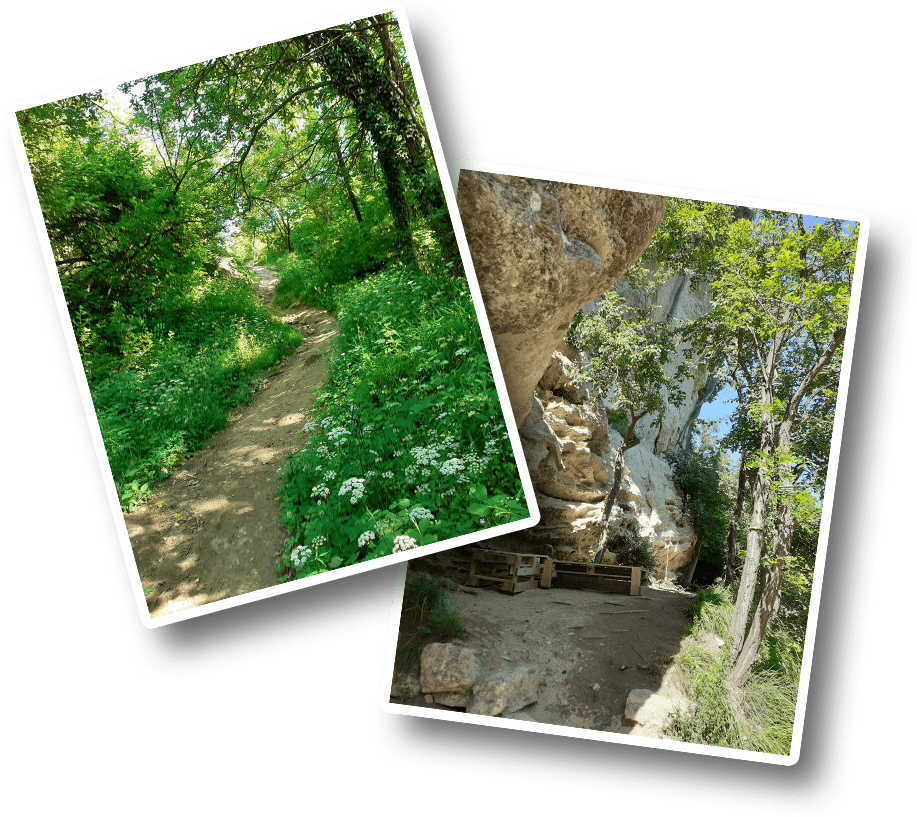
entering the wood, you come across a lawn area on the left intended as a rest area, for fitness activities and picnics;
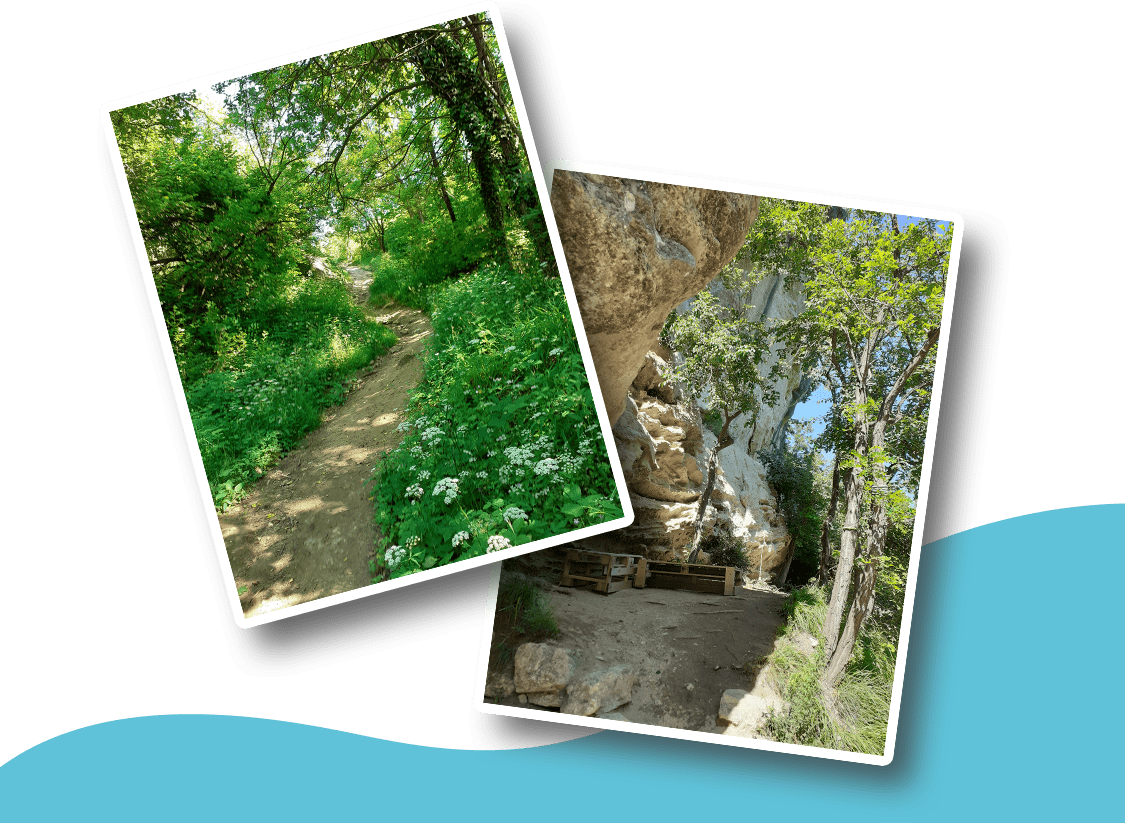
continuing along the route, you skirt the Neirone in the direction of the Falesia.
THE PATH
The itinerary develops for about 4 km, starting from the bus stop/ square in front of the Convent of NS delle Grazie and turning left onto the provincial road SP 162, near the local road on the left of the provincial road, take the path which runs along the Neirone;
entering the wood, you come across a lawn area on the left intended as a rest area, for fitness activities and picnics;
continuing along the route, you skirt the Neirone in the direction of the Falesia.
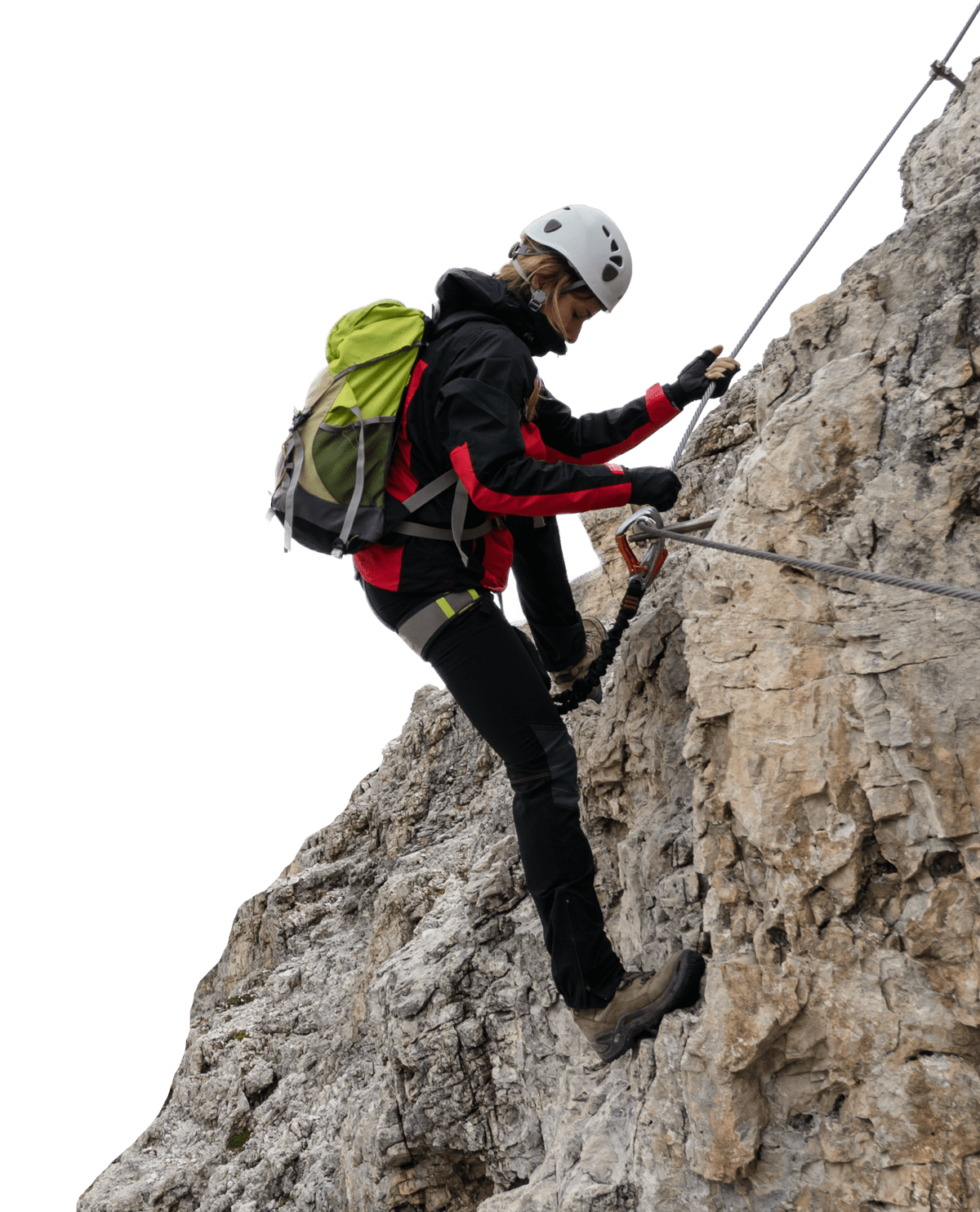
The Falesia area is already a renowned point known by climbing enthusiasts: in fact, there are over 50 climbing routes of varying difficulty, which can be tackled in all seasons, bearing in mind that the wall faces south and therefore in summer the area becomes very hot.
The Falesia area is already a renowned point known by climbing enthusiasts: in fact, there are over 50 climbing routes of varying difficulty, which can be tackled in all seasons, bearing in mind that the wall faces south and therefore in summer the area becomes very hot.
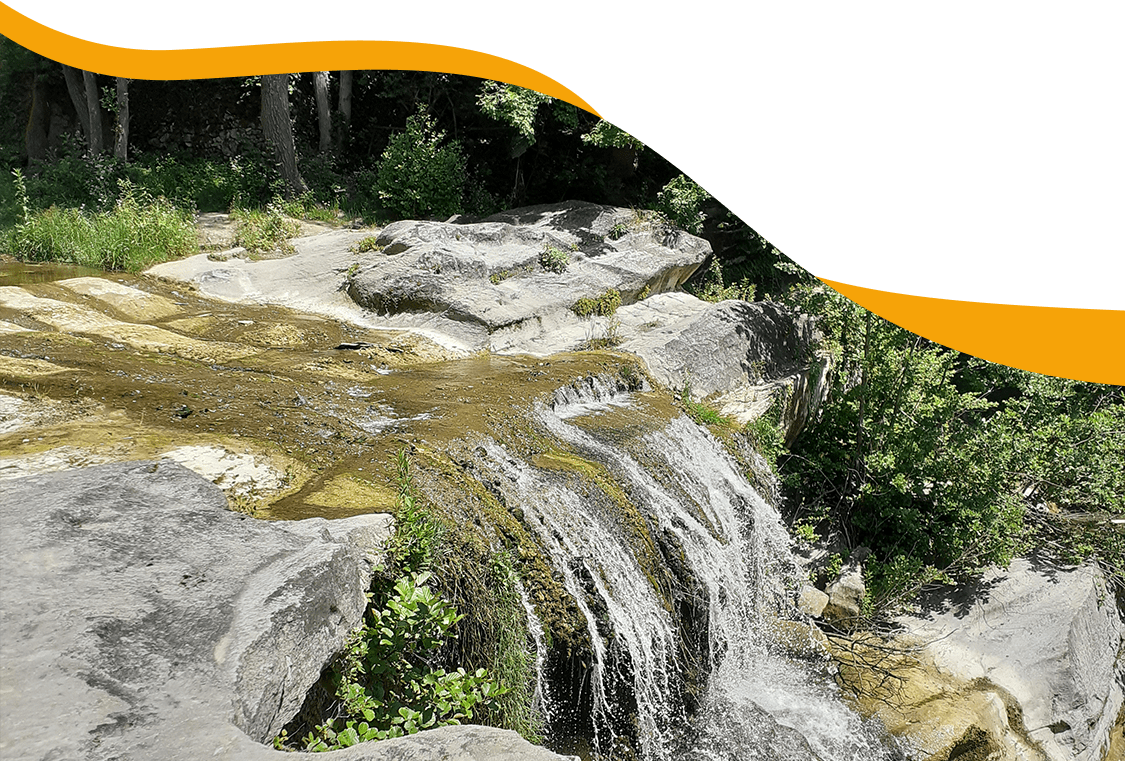
After passing the cliff, the path continues alongside the stream, offering enchanting views both of the Fort and of natural areas and the remains of ancient stone buildings up to the crossing with the stream, at which point a ford is expected to be built in order to resume the path. in the direction of the “Cascata del Neirone”.
After passing the cliff, the path continues alongside the stream, offering enchanting views both of the Fort and of natural areas and the remains of ancient stone buildings up to the crossing with the stream, at which point a ford is expected to be built in order to resume the path. in the direction of the “Cascata del Neirone”.
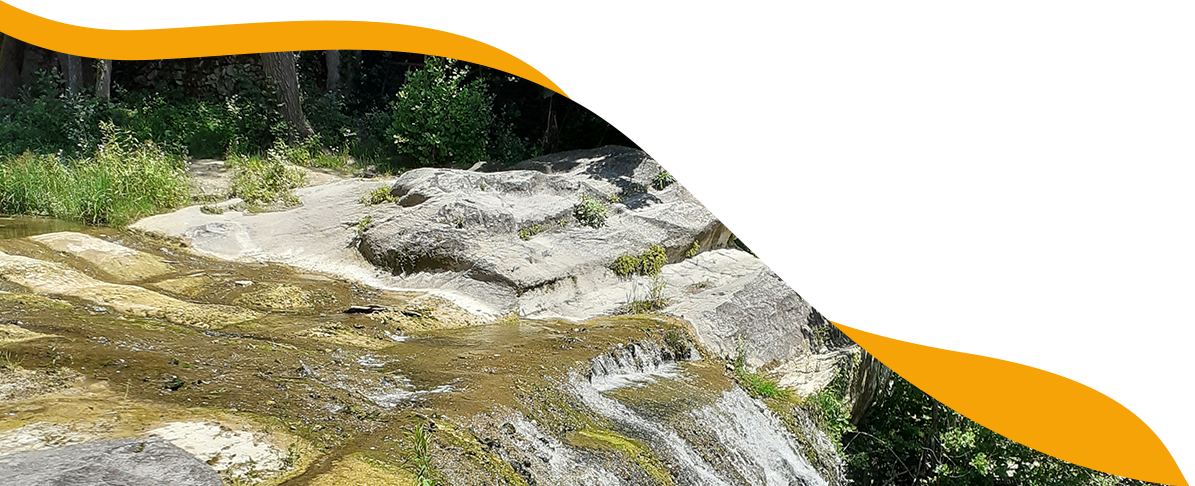
Before reaching the waterfall, the route crosses the stream again via a ford to make it easier to cross; once past the Neirone, continue until you meet the SP 160 road and reach the historic centre.
The route crosses the entire historic center touching the main historic buildings.
Before reaching the waterfall, the route crosses the stream again via a ford to make it easier to cross; once past the Neirone, continue until you meet the SP 160 road and reach the historic centre.
The route crosses the entire historic center touching the main historic buildings.